Billings, MT Neighborhoods and Home Prices by Area in 2026
Last reviewed and updated October 21, 2026. Billings figures come from Billings MLS closed sales of residential properties with a Billings address, October 1, 2025 through September 30, 2026, unless another source or window is named.
What are the neighborhoods of Billings, MT, and what do homes cost in each? Billings home prices vary by more than $190,000 by part of town: the median sale price ran from $251,000 in South Billings to $449,900 in Northwest Billings from October 2025 through September 2026, according to Billings MLS data, against a citywide median of $385,000.
In my work as a Real Estate Broker with The Morales Group at Engel & Völkers Billings, I work from Billings MLS data, and the names locals use (the Heights, the West End, the South Side) do not match the areas the MLS reports prices by. This guide maps one to the other, gives the price data for each part of town, and links to my area guides so you can go deeper on the ones that fit your budget and commute.
Where to live in Billings: video overview
If you would rather see the areas first, my video compares seven parts of Billings side by side.
How is Billings laid out?
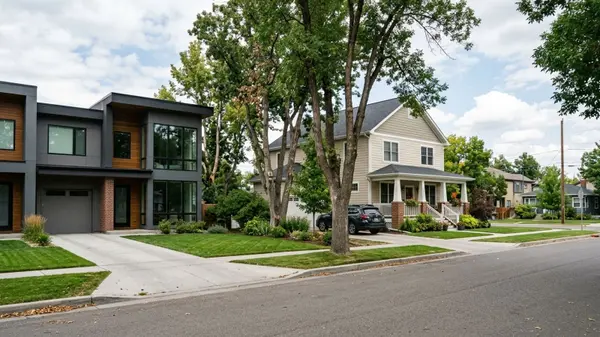
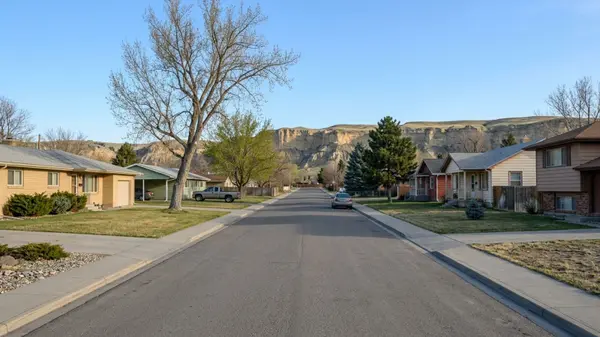
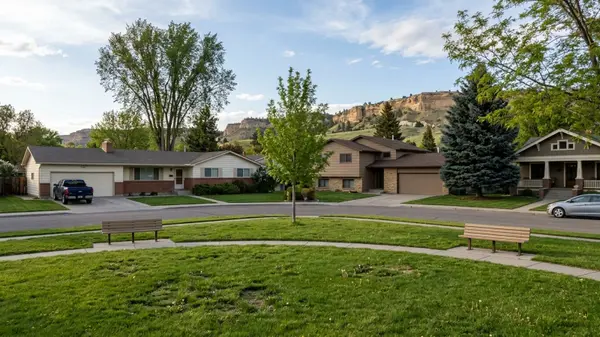
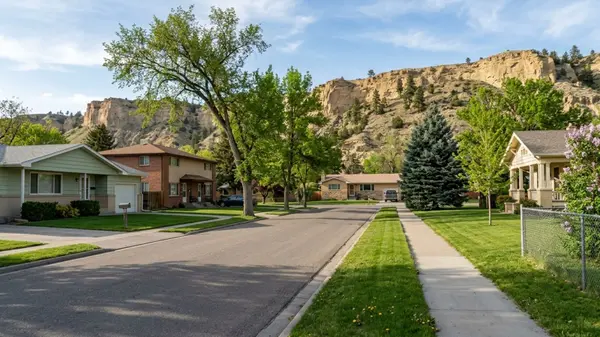
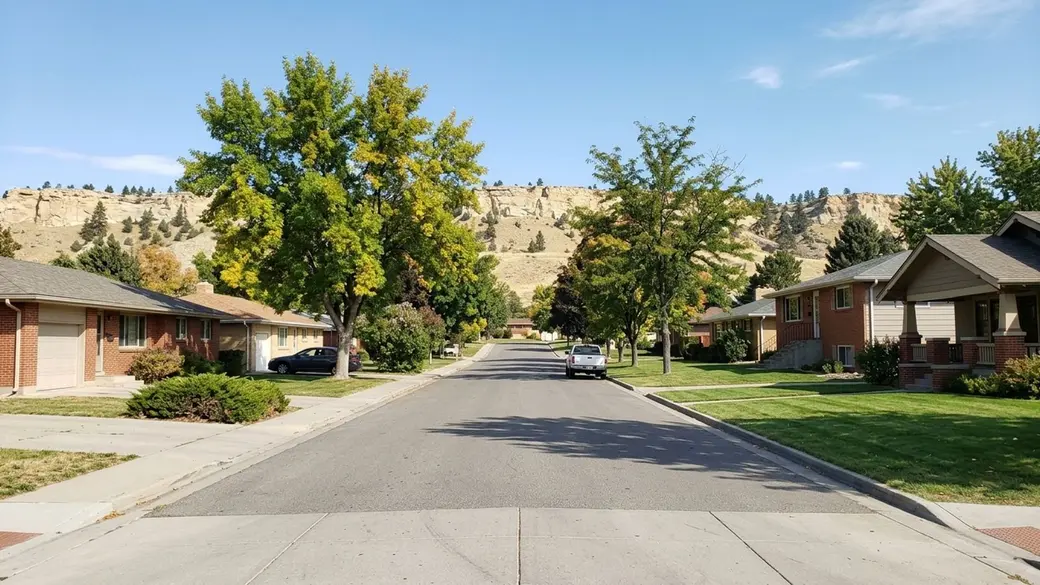
Billings is shaped by two natural edges: the Rimrocks, the sandstone cliffs along the north side of central Billings, and the Yellowstone River to the south and east. Downtown sits between them, the Heights lies northeast of downtown, and the West End extends west of the city center toward Shiloh Road and beyond. Interstate 90 runs along the south side of the city.
That layout shapes commutes, so check your drive at the hour you would actually make it before you settle on an area. My guide to getting around Billings covers roads, the airport and transit.
How do Billings neighborhood names match the MLS areas?
The Billings MLS reports prices by eight numbered areas, and the common neighborhood names span one or more of them. This is how the names people search for line up with the MLS areas used in the price tables on this page.
| Name you will hear | Billings MLS area(s) | My area guide |
|---|---|---|
| The Heights | (01) Billings Heights, west of Main, and (02) Billings Bench, east of Main | The Heights |
| West End | (07) Northwest Billings and (08) West Billings | West End |
| Downtown | (06) Downtown | Downtown |
| South Billings | (04) South Billings | South Billings |
| Lockwood | (03) Lockwood / Emerald Hills | Billings vs. Lockwood |
| Blue Creek, Duck Creek and southwest subdivisions | (05) Southwest Billings / Blue Creek / Duck Creek | Covered on this page |
Smaller named neighborhoods, such as North Park, sit inside these areas. Neighborhood boundaries are informal, so a listing's MLS area is the reliable way to compare like with like. Comparing the two largest areas head to head? See West End vs. Billings Heights.
What do homes cost in each part of Billings?
Northwest Billings had the highest median sale price of the eight Billings MLS areas at $449,900, and South Billings the lowest at $251,000, over the 12 months to September 30, 2026, according to Billings MLS data. West Billings had the most sales, 606.
| Billings MLS area | Closed sales | Median sale price | Median days on market |
|---|---|---|---|
| (01) Billings Heights, west of Main | 330 | $405,000 | 22.5 |
| (02) Billings Bench, east of Main | 140 | $362,950 | 22.5 |
| (03) Lockwood / Emerald Hills | 111 | $330,000 | 38 |
| (04) South Billings | 99 | $251,000 | 25 |
| (05) Southwest Billings / Blue Creek / Duck Creek | 135 | $389,900 | 31 |
| (06) Downtown | 74 | $322,750 | 27.5 |
| (07) Northwest Billings | 521 | $449,900 | 28 |
| (08) West Billings | 606 | $367,500 | 23 |
| All Billings | 2,020 | $385,000 | 25.5 |
Each MLS area mixes very different streets, ages of home and property types, so treat the median as a range finder, not a price for a specific house. Note that the Heights area (01) sold above West Billings (08) over this period, worth knowing if you assumed the West End always sells higher. For the top price bands, see the most expensive areas in Billings. For what each budget buys, see the average cost of a home in Billings.
Which parts of Billings usually have an HOA?
Whether a Billings home carries an HOA depends heavily on its age and area. In Billings MLS single-family sales with a Billings address that closed January 13 to October 14, 2026, none of the 296 homes built before 1960 had an HOA fee recorded, compared with 50% of the 231 built in 2020 or later. By area, 0% of Downtown single-family sales (51) and 2% of South Billings sales (66) recorded an HOA fee, against 75% in Southwest Billings / Blue Creek / Duck Creek (67). Recorded fees can be incomplete, so verify each home.
A $0 or blank fee in a listing is not proof there is no association, so confirm it in the title commitment. If an HOA is a dealbreaker, my guide to HOA fees in Billings explains how to filter for homes without one and what dues usually cover.
What about the towns around Billings?
Several towns within commuting distance of Billings have their own markets, and their medians can sit above or below the city's. These figures are from the Billings MLS for closed sales from April 1 to September 28, 2026, a shorter window, so the smaller towns are small samples.
| Town (Billings MLS, Apr 1 to Sep 28, 2026) | Closed sales | Median sale price |
|---|---|---|
| Laurel | 73 | $350,000 |
| Columbus | 25 | $445,000 (small sample) |
| Shepherd | 22 | $390,000 (small sample) |
| Huntley | 17 | $589,000 (small sample) |
| Worden | 15 | $355,000 (small sample) |
| Park City | 13 | $585,000 (small sample) |
Many homes outside Billings sit on acreage with a private well and septic system, which changes both the inspection and the monthly costs. See what to check on water and septic before buying acreage near Billings, utilities in Billings and Billings vs. Laurel.
How do you research a specific Billings neighborhood before you buy?
Research the address, not the neighborhood name. These checks apply to any Billings home on your short list:
- Commute. Drive or map the route to work at rush hour, not on a Sunday.
- Schools. Attendance boundaries are set by address and can change. Confirm the assigned schools for the specific address with Billings Public Schools.
- Crime data. Look up the specific address through the Billings Police Department's public resources and the FBI Crime Data Explorer rather than relying on any ranking of areas. For areas outside city limits, check with the Yellowstone County Sheriff's Office.
- HOA and covenants. Confirm in the title commitment whether an association or covenants apply.
- Utilities. Confirm city water and sewer or well and septic, and ask the seller for 12 months of utility bills.
Frequently asked questions
What are the main areas of Billings, MT?
The parts of Billings people usually name are the Heights (northeast of downtown), the West End (west of the city center), Downtown, South Billings, and Lockwood to the east. The Billings MLS groups Billings into eight reporting areas, from (01) Billings Heights, west of Main through (08) West Billings.
Which part of Billings has the highest home prices?
Northwest Billings (MLS area 07) had the highest median sale price of the eight Billings MLS areas at $449,900 from October 2025 through September 2026, according to Billings MLS data. Billings Heights, west of Main (area 01) was second at $405,000.
Where are the lowest-priced homes in Billings?
South Billings (MLS area 04) had the lowest median sale price of the eight Billings MLS areas at $251,000 across 99 sales from October 2025 through September 2026, according to Billings MLS data. Downtown (area 06) followed at $322,750.
How can I check crime or schools for a Billings address?
Billings crime data for a specific address is available through the Billings Police Department and the FBI Crime Data Explorer. School assignments for an address come from Billings Public Schools. Those official sources answer the question for a specific address better than any characterization of an area.
Narrowing down where to live? My guide to moving to Billings covers timing and costs, and you can download my free Billings relocation guide to compare areas side by side.
Gene Hauck is a Real Estate Broker and REALTOR® with The Morales Group at Engel & Völkers Billings, 1921 1st Ave N, Billings, MT 59101. He works with buyers relocating to Billings, real estate investors and Billings-area homeowners selling their homes. Montana license RRE-BRO-LIC-135399. Call or text 406-861-4844.
Categories
Recent Posts