Navigating Home Financing in Billings
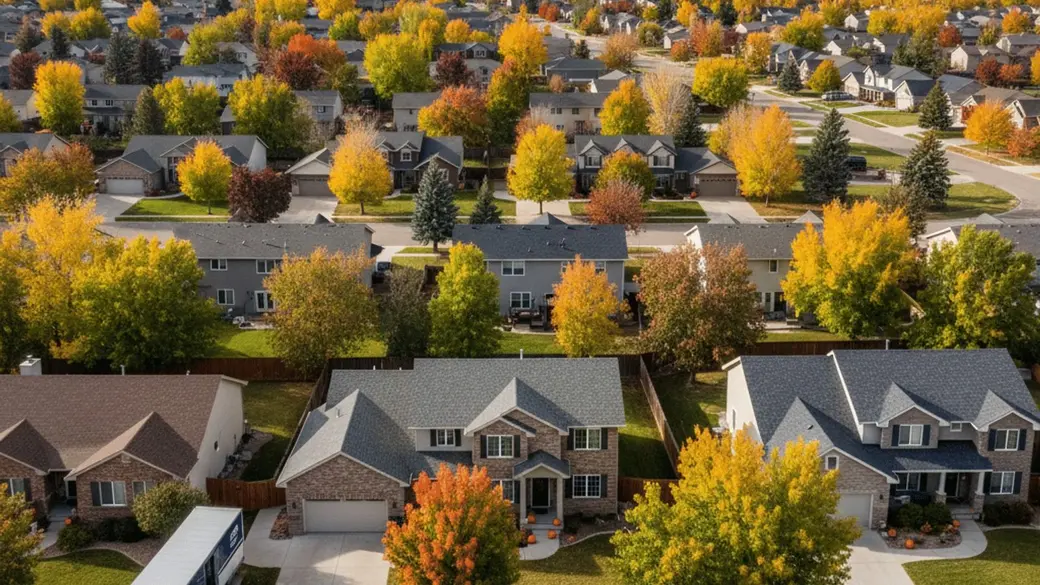
If you have been keeping an eye on the housing market in Yellowstone County lately, you know that things have shifted. With median home prices hovering around $400,000 and interest rates that aren’t what they were a few years ago, buying a home in Billings requires a bit more strategy than it used to. It is no longer just about finding the right house; it is about finding the right money to pay for it.
For many buyers, the biggest hurdle isn't the monthly payment itself—it’s the cash required upfront. Between the down payment and closing costs, the initial check you have to write can feel overwhelming. However, there is a silver lining that many online mortgage calculators won't tell you about. Billings has some of the most robust local buyer assistance programs in the state. From city-specific loans to state-backed bonds, there are resources designed to bridge the gap between your savings account and the closing table.
This guide isn't a textbook. Think of it as a conversation over coffee about how the numbers actually work here in town. We will walk through the standard loan types, the specific local programs that can offer up to $15,000 in assistance, and exactly what lenders are looking for right now.
Core Mortgage Options for Billings Buyers
Before we get into the specialized grant programs, we need to look at the foundation: the mortgage loan itself. Most buyers in Yellowstone County will use one of four main loan types. Choosing the right one depends heavily on your credit history, your military service status, and exactly where you plan to buy.
Conventional Loans: This is often the default choice for buyers with strong credit scores, typically 620 or higher. While there is a persistent myth that you need 20% down, that is rarely the case anymore. First-time buyers can often get into a conventional loan with as little as 3% down. If you have the savings to put down 20%, you avoid Private Mortgage Insurance (PMI), but for many, keeping that cash for renovations or emergency funds is the smarter play.
FHA Loans: If your credit score has a few bruises, the Federal Housing Administration (FHA) loan is usually the best alternative. These loans allow for credit scores down to 580 with a 3.5% down payment. In 2026, the FHA loan limit for Yellowstone County is approximately $472,030. This is a crucial number because it covers the vast majority of starter and mid-range homes in Billings. If you are looking at a modest bungalow in the Heights or a townhome on the West End, FHA financing will almost certainly cover it.
VA Loans: Montana has a high population of veterans, and if you have served, this is arguably the best loan product available. VA loans offer 100% financing, meaning zero down payment is required, and they do not charge monthly mortgage insurance. In a market where cash-to-close is the biggest barrier, a VA loan is a massive advantage.
USDA Rural Development Loans: Here is where geography gets tricky. USDA loans offer 0% down financing for "rural" areas. Because Billings has grown so much, the city limits proper are generally ineligible—you cannot use a USDA loan to buy a house in central Billings. However, if you are willing to commute a little, you might qualify. Areas like Shepherd, Worden, and potentially parts of the outskirts near Lockwood or Laurel often fall into the eligible zone. You always need to check the specific address on the USDA map, but don't rule this out if you are looking for a little more acreage outside of town.
Billings & Montana-Specific Assistance Programs
This is the section where local knowledge really pays off. While national banks offer generic loans, they often miss the specific down payment assistance (DPA) programs available only to Montanans or residents of Billings. These programs can sometimes be layered on top of the loans mentioned above.
City of Billings First-Time Home Buyer Program: This is one of the most generous tools available, yet many buyers don't know it exists. The City of Billings offers a deferred loan of up to $15,000 to help with down payment and closing costs. "Deferred" is the magic word here—it has 0% interest and requires no monthly payments. You simply pay it back when you sell the home, refinance, or pay off your main mortgage.
- Location: The home must be within the Billings city limits.
- Contribution: You typically only need to contribute $1,000 of your own money.
- Income: There are household income limits (generally 80% of the Area Median Income), so this is targeted at low-to-moderate-income buyers.
Montana Board of Housing (MBOH): While the city program is local, the Montana Board of Housing operates statewide and is incredibly popular here. They offer a few different "products" that your lender can access for you.
- Bond Advantage: This provides up to $15,000 (or 5% of the purchase price) as a second loan to cover your down payment. Unlike the city program, this is an amortizing loan, meaning you do make small monthly payments on it at a low interest rate.
- MBOH Plus: For buyers with slightly lower assets, this offers a deferred second mortgage for assistance, similar to the city structure, where you don't pay it back until you sell or refinance.
Trust Montana & Community Land Trusts: This is a more unique model that you might see in subdivisions like Annafeld. In this scenario, a community land trust (like Trust Montana) retains ownership of the land underneath the house, while you buy the physical structure. By taking the land cost out of the equation, the purchase price can drop significantly—sometimes by $50,000 to $90,000. It limits how much equity you can pocket when you eventually sell, but it is a powerful way to get into a high-quality home if you are priced out of the traditional market.
NeighborWorks Montana: This statewide partner works closely with lenders to provide down payment assistance and, crucially, the homebuyer education classes required by most of these programs. They act as a hub for counseling and financial prep that makes the rest of the process possible.
What It Takes to Qualify in Yellowstone County
Money aside, lenders are essentially trying to answer one question: "Is this a safe bet?" When you sit down with a loan officer in Billings, they are going to look at a "financial selfie" composed of four main parts.
First is your credit score. As mentioned earlier, the magic number for FHA is usually 580, while conventional loans and many of the Montana Board of Housing programs prefer 620 or higher. If you are on the borderline, do not panic. Sometimes paying down a single credit card balance can bump you up enough to qualify.
Second is your Debt-to-Income Ratio (DTI). This compares your gross monthly income to your monthly debt payments (credit cards, car loans, student loans, plus the new mortgage). Lenders generally want to see this total number stay under 43% to 50%. If you have a high car payment, it might reduce the amount of house you can buy.
Third is the down payment. We have busted the 20% myth, but you do need some cash. For a $400,000 home using an FHA loan, 3.5% is $14,000. This is exactly why the City of Billings $15,000 assistance program is so valuable—it can virtually wipe out that requirement for qualified buyers.
Finally, they look at employment history. Lenders typically want to see two years of consistent employment. It doesn't necessarily have to be the same job, but it should be in the same field or show a stable progression. If you just moved to Billings for a new job, an offer letter and a pay stub are often enough to get started.
Estimating Closing Costs in Billings
The down payment gets all the attention, but closing costs are the silent budget-buster. These are the fees paid to third parties to process the transaction, and they are separate from your down payment. In Yellowstone County, you should budget roughly 2% to 5% of the purchase price for these costs. On a $400,000 home, that means an additional $8,000 to $20,000, though it is often on the lower end of that spectrum.
So, where does that money go?
- Lender Fees: Origination charges and application fees.
- Appraisal: Someone has to verify the home's value (usually $600 to $900).
- Title Work: In Montana, it is common custom for the seller to pay for the Owner’s Title Insurance policy, which protects you. However, you will likely pay for the Lender’s Title Insurance policy, which protects the bank.
- Prepaids: This is the big one. You will likely have to prepay six to twelve months of homeowners insurance and set up a tax escrow account. Property taxes in Billings vary by district, but having that cash ready upfront is mandatory.
Local Billings Lenders vs. National Online Banks
In the digital age, it is tempting to just click "Apply Now" on a big national website that promises a pre-approval in minutes. While those tools are slick, they can be a disadvantage in a market like Billings, specifically if you need assistance.
The local programs we discussed—especially the City of Billings First-Time Home Buyer program and Montana Board of Housing loans—require you to use a participating lender. A generic call center loan officer in another state likely won't know these programs exist, let alone how to structure them. If they miss that $15,000 opportunity, that is money directly out of your pocket.
Local lenders also understand the quirks of Yellowstone County properties. They know how to handle properties with cisterns or wells if you are buying on the outskirts. They know which condo complexes in town are FHA-approved and which aren't. perhaps most importantly, listing agents in Billings know the local lenders. When a seller sees a pre-approval letter from a reputable local bank, they often trust it more than a letter from an internet-only lender they have never heard of.
Steps to Secure Financing in Billings
If you are ready to stop renting and start owning, here is a logical roadmap to get you from application to keys.
Step 1: Check credit and savings early: Don't wait until you find a house. Pull your credit report months in advance to fix any errors. Get a clear picture of exactly how much cash you have liquid for closing costs.
Step 2: Get Pre-Approved (not just pre-qualified): Connect with a local lender who is familiar with MBOH and city programs. Ask for a full pre-approval where they verify your income and assets. This makes your offer as strong as cash.
Step 3: Complete Homebuyer Education: If you plan to use any state or city assistance, this class is almost always mandatory. NeighborWorks Montana offers these, and they fill up. Get this certificate done early so it doesn't delay your closing.
Step 4: House hunt within your budget: Now that you know your numbers, you can explore neighborhoods in Billings with confidence. Whether you are looking at the West End or the Heights, stick to the price range your lender approved.
Step 5: Lock rate and submit documents: Once your offer is accepted, your lender will "lock" your interest rate. You will need to submit full documentation quickly—tax returns, bank statements, and pay stubs. Stay responsive to keep things moving toward closing day.
Frequently Asked Questions
Can I get a USDA loan in Billings, MT?
Generally, no, you cannot get a USDA loan within the Billings city limits because the population density is too high to be considered "rural." However, surrounding communities like Shepherd, Worden, and potentially areas near Lockwood may be eligible. You must check the specific property address on the USDA eligibility map to be sure.
How much down payment do I need for a house in Billings?
The idea that you need 20% down is a myth. Most first-time buyers in Billings use FHA loans requiring 3.5% down or Conventional loans requiring 3% down. If you are a veteran using a VA loan, or if you qualify for USDA financing in the outskirts, you may not need any down payment at all.
What is the income limit for the City of Billings First-Time Home Buyer program?
The program targets low-to-moderate-income households, generally capped at 80% of the Area Median Income (AMI) for Yellowstone County. These limits change annually based on household size, so you will need to verify the current 2026 numbers with the Community Development Division or a participating local lender.
Do I have to be a first-time buyer to use Montana Board of Housing programs?
Usually, yes, you must be a first-time homebuyer (defined as not having owned a primary residence in the last three years). However, there are exceptions for "Targeted Areas" where this requirement is waived, and for certain specific loan products, so it is worth asking your lender even if you have owned a home before.
Categories
Recent Posts